
The Nightmare of Agriculture: Masanobu Fukuoka and the Natural Mind
An interview with Larry Korn
NATURAL WORLD
Adam
3/25/20267 min read
The Nightmare of Agriculture
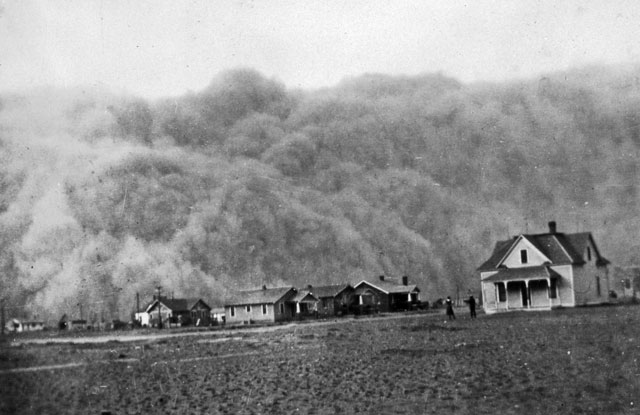
"This is just a short-term — I call it the nightmare of agriculture. This was in the 30s, 1930s. So the science and technology, it seems like, is about to bring new abundance and leisure to the world. And who would want to go back?"
In the 1930s, the world was drunk on the promise of science and technology. Progress seemed unstoppable, abundance felt inevitable, and the idea of questioning industrial agriculture would have seemed not just backward — but absurd. Yet this is precisely the moment Masanobu Fukuoka began to see something deeply wrong.
Introduction
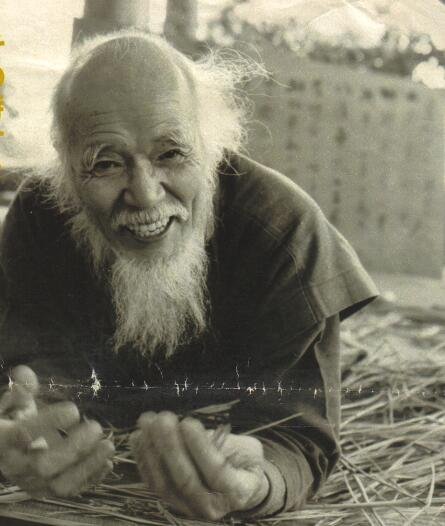
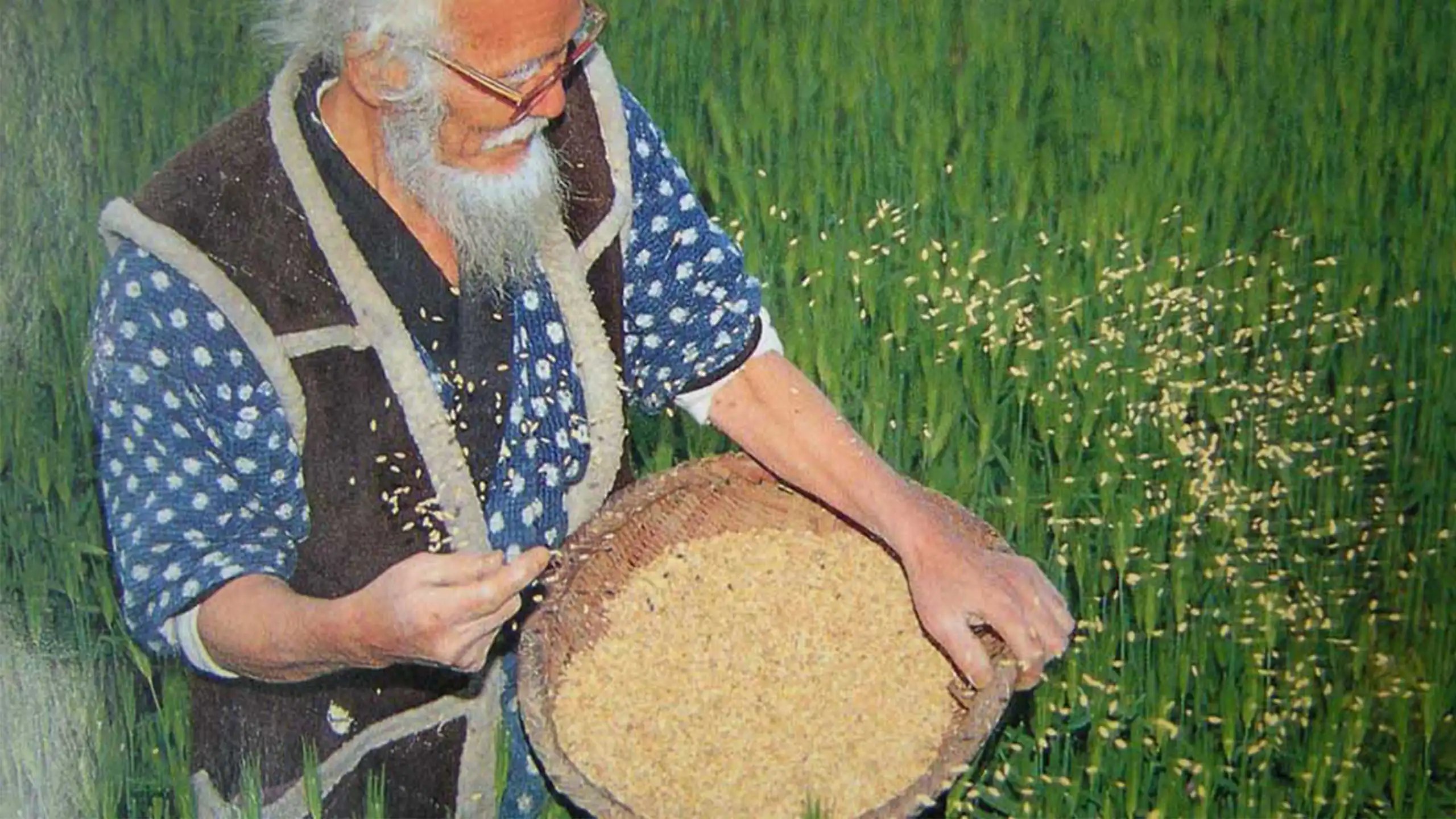
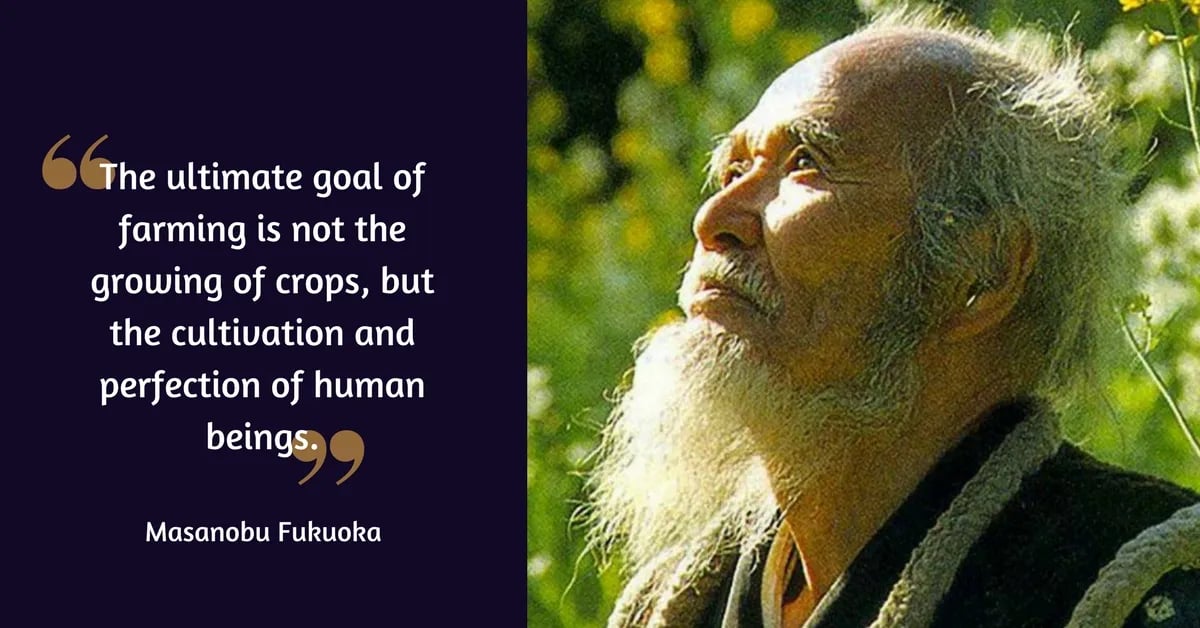
Masanobu Fukuoka was a Japanese farmer, philosopher, and author whose radical approach to agriculture and life challenged the foundations of modern civilization. This interview, conducted by Larry Korn — Fukuoka's long-time student and the English translator of his seminal work The One-Straw Revolution — offers a rare window into the philosophy behind natural farming. What follows are Larry's words, preserved as spoken, with only light context added for clarity.
Growing Up With Nature
Fukuoka grew up on a farm on the island of Shikoku in Japan. From an early age, he observed something that most people around him were blind to:
"He saw that nature was completely interconnected, and what people were doing was taking this reality — this interconnected reality — and dividing it up into bits and pieces through their discriminating mind. Creating north and south, separating the tree from the bush, from the stones, and from the plants, from the animals. And adding values like good and bad, beneficial insect and a pest. And all of these things."
This act of mental division — of labeling, categorizing, and assigning value — is not a discovery of reality. It is, Fukuoka believed, a construction layered on top of reality.
"All of these thoughts and this discrimination doesn't exist in the world of nature. This is only in the world of human thinking."
The Spiral of Unintended Consequences
From this fragmented view of nature, a dangerous assumption follows: that humans can improve upon nature. Korn explains how Fukuoka traced the logic of this mistake:
"People get the idea somehow that they can actually improve upon nature, and so they tried this and that, thinking that they could make human life better. But because of the limited understanding that people have, they can only get in the way, mess things up somehow. And a side effect, an unintended consequence, occurs. And so then people deal with that consequence in the same way of thinking that they did the first thing — and that creates a consequence, each one getting larger and larger."
This is the core of what Fukuoka called the nightmare of agriculture — and, more broadly, of modern civilization. We are not progressing. We are managing an ever-growing pile of problems that we ourselves created.
"Pretty much, we find ourselves today where all we're doing, just about, is mitigating the unintended consequences of things that we've done in the past
An Idea Nobody Wanted to Hear
Fukuoka tried to share this understanding. He spoke to coworkers, to people on the streets. Nobody got it.
"They were living within the world of human thought completely. And it seemed like to them that what he was talking about was going back."
But Korn is clear — this is a misunderstanding that persists even today:
"To Fukuoka, of course, this is not about going back. This is about reality. It's just this place that we find ourselves in. We don't know why, how it came about — it just is."
Rather than continuing to argue in the abstract, Fukuoka made a decisive choice. He returned to his farm.
"What he decided to do is go back to his farm and apply this understanding to agriculture, and thereby show its benefit to humanity."
Three Ways We've Gone Off the Path
Korn identifies three interconnected ways in which human society has strayed from its natural place — all of them rooted in Fukuoka's thinking.
1. The Separation from Nature Through Thinking
"One is the process where we separate ourselves from nature. I think anybody in the modern world does feel a separation from nature — we know there's a separation. And Fukuoka pinpoints how it is that we separate ourselves: by this process of thinking and discrimination and human values. And all these things don't exist in nature. So we're living in a separate world."
2. The Belief That Humans Are Superior
"Somewhere along the line — and it seems to have been right around when agriculture began, about ten or twelve thousand years ago — people got the idea that human beings are different than other species, that we're better, worth more value, and that the world was given to us to do whatever we wanted. And that through our intellect and through science, we could actually improve things for human beings. And well — not so important what happens to other species. It's just collateral damage."
3. The Practice of Agriculture Itself
"A third way that we've gone off the path — also related to agriculture — is the practice of agriculture itself. With ploughing, and the logging, and the irrigation, and all this agricultural management — it really has not been good for the environment. We've run down the richness that was given to us."
The Path Back — And What It Requires
The situation is serious, but Korn, speaking through Fukuoka's lens, does not see it as hopeless. The key insight is that if we can fix the thinking, the environment will begin to heal on its own:
"We've got a lot to do. We've got to turn around all three of those things. But if we turn around the first two, then the change in the environment will happen of its own. Because once we get into a proper way of thinking and a proper relationship to nature, then we will intuitively know how to make a living in the world — how to feed ourselves and shelter ourselves — which also allows other forms of life to live and enriches the soil. And we will just know that intuitively. That's the way people lived for all that time."
Natural Farming Is Not a Technique — It's a View
This is perhaps the most misunderstood aspect of Fukuoka's work. People hear "natural farming" and immediately think of methods, tools, practices.
"He does call it natural farming, but let's say it's the natural way — it's the way of seeing nature directly. And people just want — they associate natural farming with the technique. It's not the technique. It's the view. And once you have that view, you enter into nature and you participate from the inside, instead of as a visitor from the outside. Then you'll know exactly what to do."
On Observation — and Why That Word Falls Short
Even the word observation carries a hidden problem, Korn notes. In Western thinking, observation implies a separation between observer and observed:
"Usually Westerners refer to that as observation. But to me, observation already implies the split, the separation — because it's an observer and the observed."
The natural farming alternative is not passive watching. It is full participation:
"The idea of observation from the natural farming point of view is more of an interaction. You are not observing — you are actually living in nature and you're getting to know your place. As you practice natural farming, that is what you're going for: that you become so intimately connected with the place that it's an extension of yourself."
Coming Home — The State of Mu
Through this practice of interaction, something deeper eventually emerges. Korn describes it using one of Fukuoka's central concepts:
"You're doing things, you're interacting with nature, you're doing what Fukuoka did — trying things, and then seeing what the response is, and then going that way. And pretty soon you get so tuned in by following that trail that eventually you come to home."
"Home is the state that Fukuoka refers to in a lot of different ways — but as mu, or as do-nothing. You get to the point in which you are totally connected, right there. And the feeling — there's no qualitative characteristic to that place — but he refers to it with great joy. And sometimes he refers to it as a state, an upwelling of love."
Mu (無) in Japanese philosophy refers to a state of emptiness or nothingness — but not in a nihilistic sense. It is the dissolution of the false boundary between self and world. Do-nothing, similarly, does not mean laziness — it means acting without the interference of ego, judgment, or the compulsion to improve what doesn't need improving.
"He really felt that love had an important role in our understanding and enjoyment of the world — because it is really at the basis of everything."
Closing Reflection
What Masanobu Fukuoka offered was not a farming manual. It was a mirror — held up to a civilization that has convinced itself that thinking more, doing more, controlling more, is the path to wellbeing. His life's work was a quiet, patient argument that the opposite is true: that stillness, connection, and humility before nature are not primitive instincts to be overcome, but the very ground of human flourishing.
The nightmare of agriculture is not just about farms. It is about a way of seeing. And the way out begins, as Fukuoka showed, not with new technology — but with a new (or perhaps very old) mind.
Interview conducted by Larry Korn, long-time student of Masanobu Fukuoka and translator of "The One-Straw Revolution."
Stay on the Path
Fukuoka's ideas don't arrive all at once. They settle slowly — like seeds finding their own time to germinate.
If something in this piece stirred a quiet recognition in you, follow along. We share reflections on nature, philosophy, and the kind of thinking that doesn't try to improve the world — but to see it more clearly.
Follow us on IG:@aadam_story and join a community that is, in its own small way, trying to find its way back home.
Because as Fukuoka reminds us — the path was never lost. We just stopped looking.